
ATP Synthase
↑ UpATP synthase is a critical enzyme in cellular energy production. It converts ADP to ATP using a proton gradient across membranes. ATP, often referred to as the energy molecule, stores energy by compressing many negatively charged phosphates together, connected by high-energy phosphoanhydride bonds (P-O-P). By breaking the bond, energy can be released and coupled to many other unfavorable processes. This is a key part of how life can exist so far from thermodynamic equilibrium! The animation below shows the rotary mechanism of the synthase:
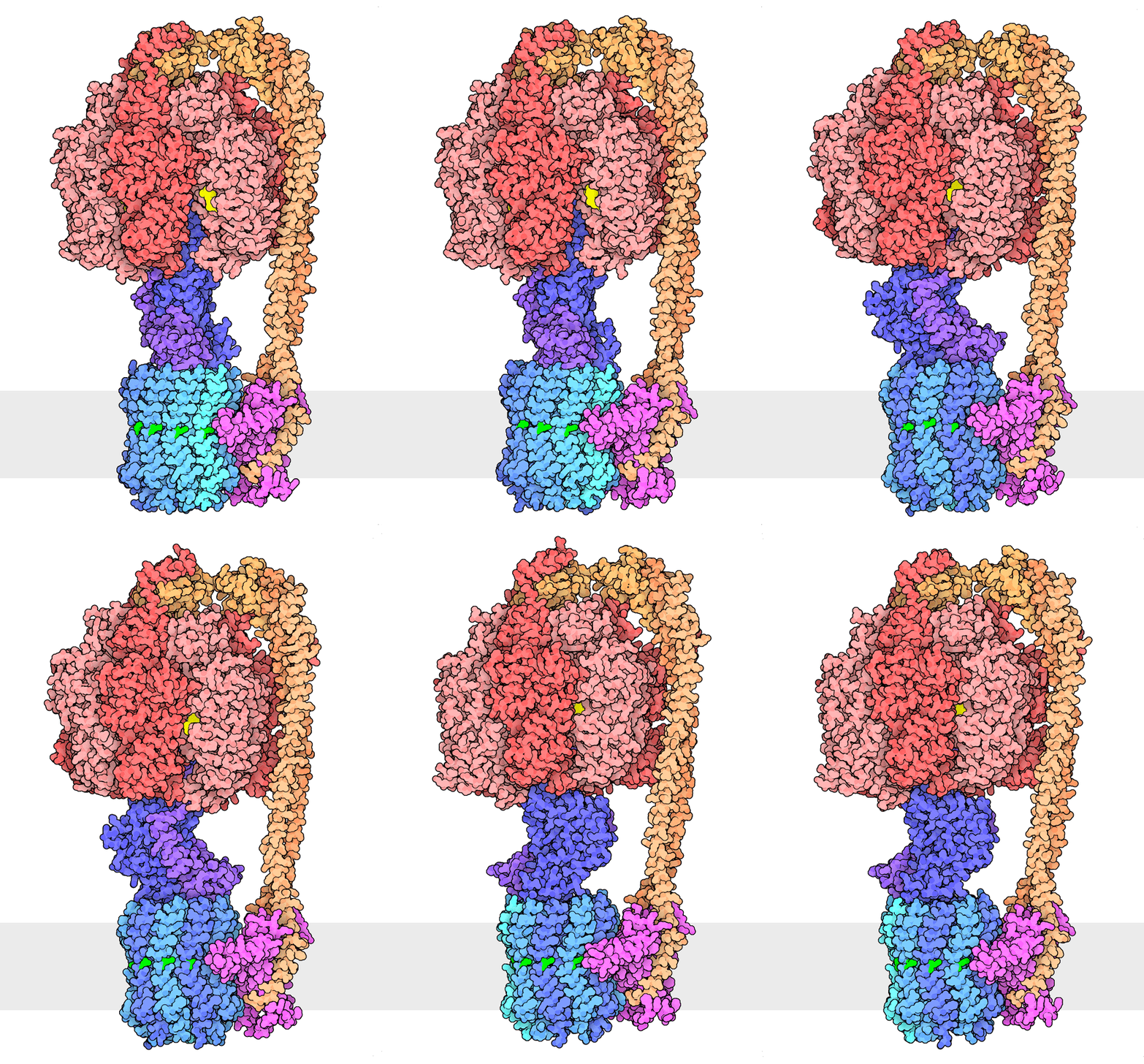
Source: RCSB PDB
The upper, red domain functions like an ATP-driven rotary motor, and the lower, blue domain turns a cylindrical rotor using the flow of protons (H+) through the magenta, pump-like subunit. The two motors can drive each other via the dark blue “axle” in the center. Normally, the upper motor is powered by the flow of protons (H+) down their gradient. If the process runs in reverse, the hydrolysis of ATP to ADP and Pi can be used to pump H+ across the membrane. Check out this video from the Steward Lab to learn more: